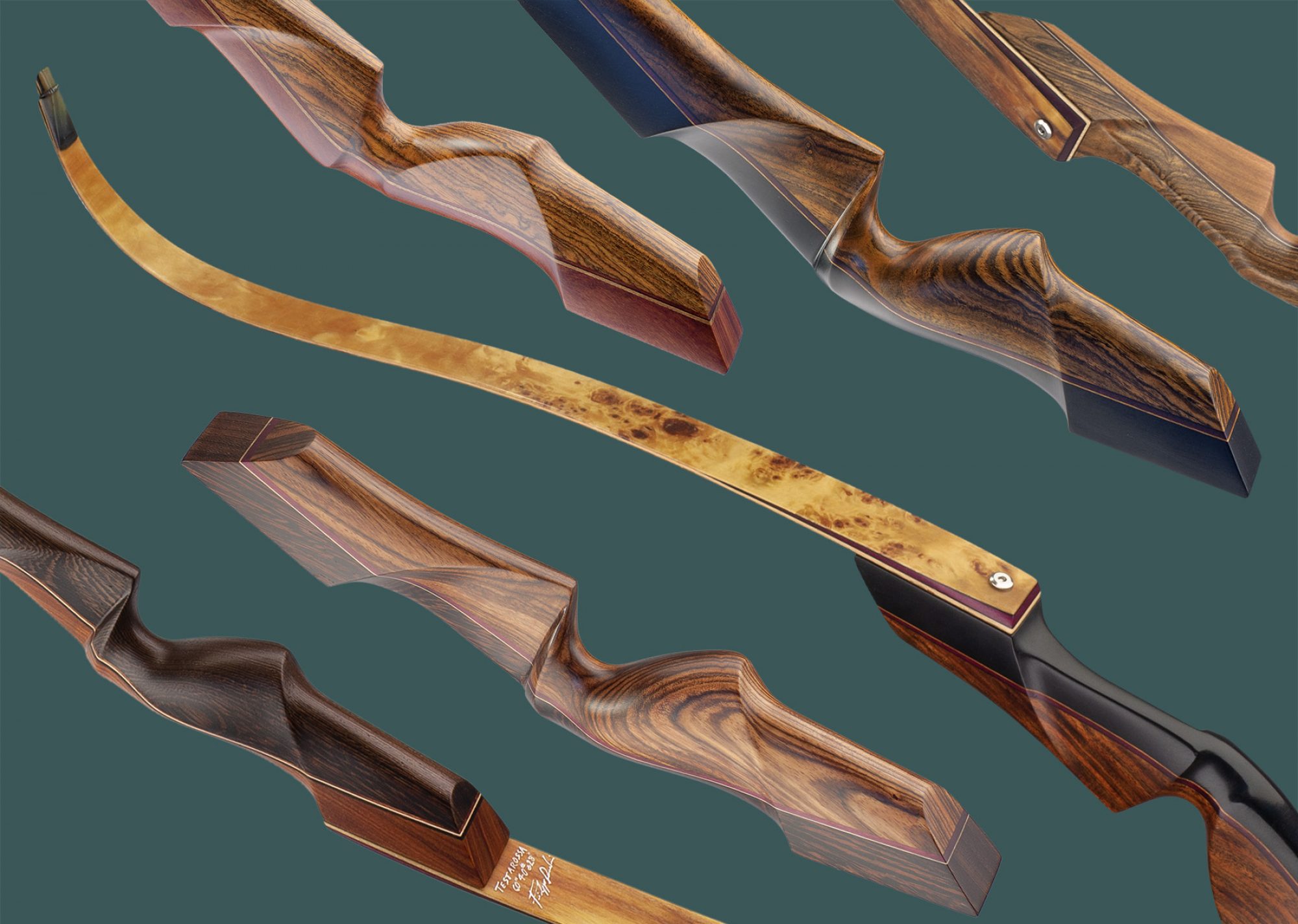

The road you take in Oregon to get from the BLACKTAIL headquarters to the ROSE CITY headquarters offers unforgettable scenery! (as long as you pay attention to the danger of the huge Elk deer that can cross the road….)
Port Orford Cedar is the plant of choice for making wooden arrows, and its history is worth telling. To do so we must set ourselves in the state of Oregon, which owes most of its history to the timber trade.
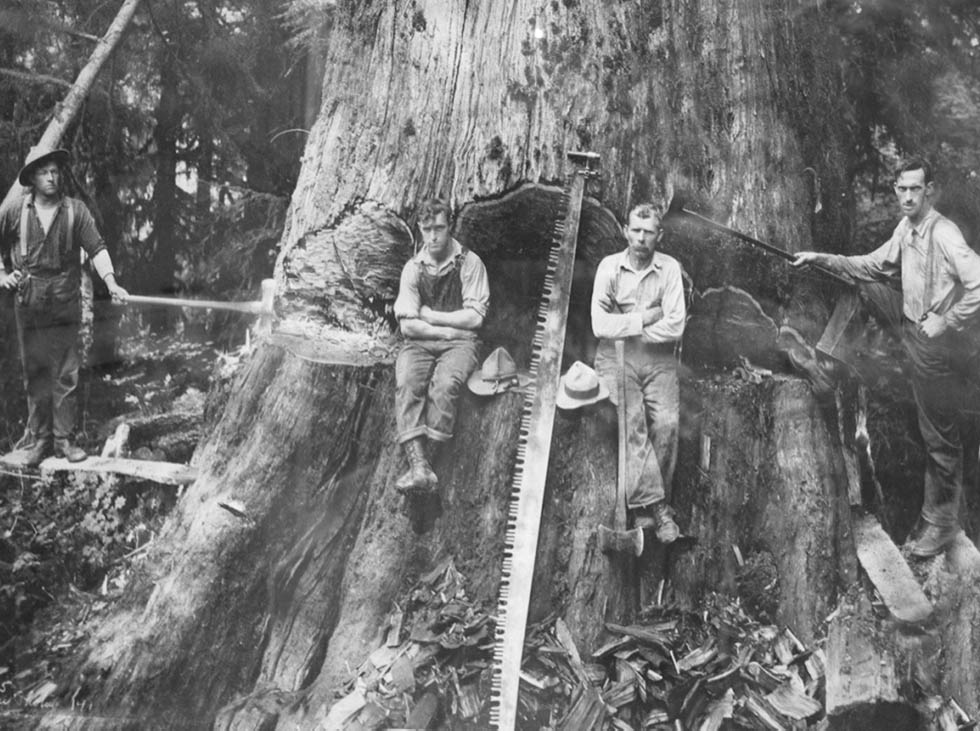
In the meantime, let’s say right away that it is not a cedar tree (good start). It was called that in its native area in southern Oregon (and northern California), near Port Orford. There it was discovered, in the mid-1800s and imported to Scotland where it was grown in the greenhouse of a man named Lawson, hence the scientific name used in Europe: LAWSON’S CIPRESS, which made it popular for English gardens. Port Orford Cedar, as we will continue to call it, (abbreviated to POC for friends) is an evergreen conifer of the cypress family. Its native range extends from southern Oregon to northern California and overseas to Japan and Taiwan.
Its special features are that it grows straight up even to over 60 meters in height and has particularly strong wood (I would like to see you stand 60 meters tall in the ocean winds of Oregon without breaking…).
The intense and unmistakable scent you smell when breaking an arrow is due to the very special resin that keeps the wood at the right degree of elasticity’ even when seasoned for incredibly long times. I believe it is because of this resin that POC is considered the most’ durable and resilient of all the “soft” woods in the world.
This very pleasant scent, in addition to perfuming the house, seems to keep moths out of cupboards (now you know what to do with broken arrows). These characteristics made it very valuable for building the noble parts of ships or palaces in the Western world.
Across the Pacific Ocean in Japan, it was called Hinoki and had earned a place of honor in Buddhist and Zen symbolism, not only because of its wonderful characteristics of durability and strength but certainly also because of the scent that gave it high spiritual values. Buddhists thought (and think) that this wood brought good luck and was indispensable for making sacred objects and temples. At least the main beam of the roof of the house had to be made of this wood if one wanted to have a lucky life. Even today it is customary to make an arrow out of POC at the beginning of each year on which to write one’s wishes and resolutions for the coming year.
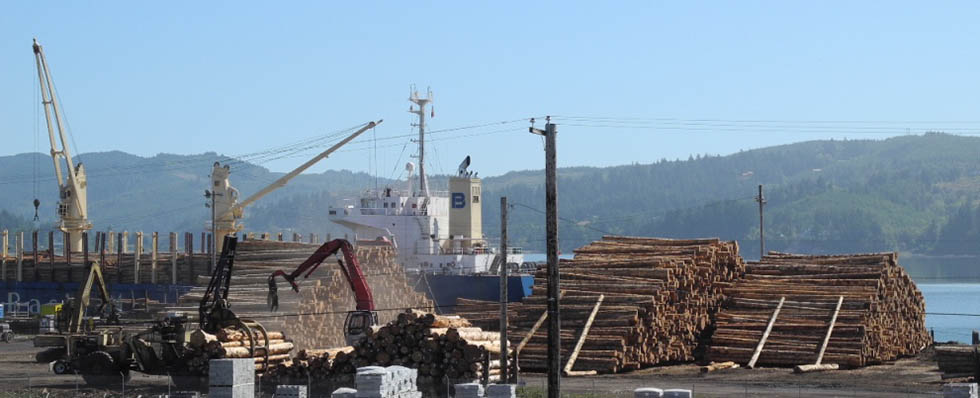
This fact brought POC close to extinction in Japan, and lumber traders from the rising sun began sending ships to Oregon where they cut down the lush forests and then processed the lumber on the ships during the return voyage. This left the domestic lumber mills with a “palm in their hands.” Considering also that the Japanese did not enjoy much sympathy in the United States, especially on the Pacific Coast after the Pearl Arbour debacle. One could imagine that, sooner or later, a way to protect the local resource would be found….
Here we are in our own time:
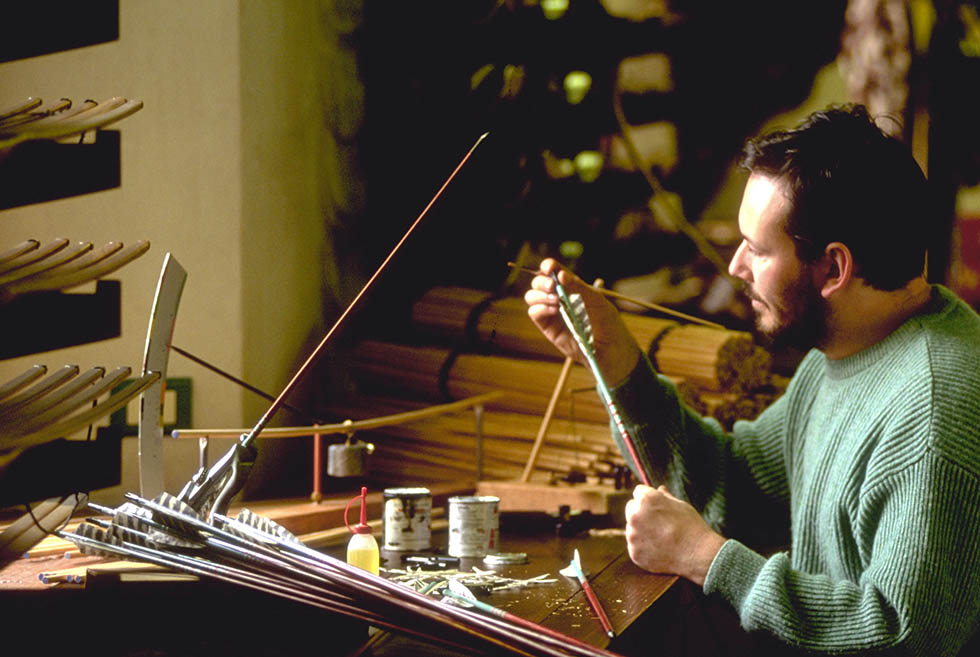
I started importing the renowned POC shafts, in the late 80’s, from the company ACME (yes the name is exactly the same as the company where poor Willy Coyote buys his diabolical contraptions to try to catch the elusive Beep Beep…. no I don’t think the company was the same, maybe it was just a joke..). I remember, the first order arrived shipped from a post office that completely wrapped the packages with sheets of penny stamps of all kinds. The cartons were so funny that I kept one hanging in my house for years.
A few years later, Rose City, headed by Gerald Dishion (Jerry to his friends) bought ACME and closed it down, thus taking over the world monopoly of POC arrow shaft manufacturing. Rose City had been in existence since 1932 and was finally purchased by Jerry in ’94 who already had decades of experience in the archery industry as a bow and arrow maker and dealer. Jerry boasted early on that he was responsible for getting a local law passed prohibiting the export of POC wood from forests in pieces longer than 82cm. (just the size of arrows). This finally doomed the Japanese to the worst misfortunes without POC roof beams but guaranteed us archers a future full of fragrant arrows!
In early 1991 POC auctions became very difficult to get. The Rose City was always late with deliveries, and in Europe there was beginning to be talk of material shortages. Several European dealers sought other solutions. Personally, after experimenting with all the available woods, I chose HEMLOCK wood, a different softwood imported from Canada, widely used for window frames in northern Europe, which I had processed by a carpenter’s shop in Bergamo. It was a very good material and I even won the world championship in Australia with it. It was a little lighter than POC (which was a big plus) but also more brittle, and my customers kept wanting the good old POC.
Oregon is not very far from Colorado where I used to spend the end of the summer on my hunting adventures, so in the summer of 91, I decided to go and see for myself what was going on in the POC forests and the Rose City. In the company of a friend who is a great business marketing expert, Bruno Piarulli, we left for Oregon to visit Jerry and his company.
Jerry told me that the crisis in the availability’ of his auctions, was only due to the return of the U.S. Marines from the first Gulf War (what does that have to do with it you’ll think as I did…).It seems that the soldiers’ reception committees immediately needed a few million rods to fix their beloved U.S. flags to wave in salute to the victorious troops. This put a dent in the normal availability of rods for almost a year.

About my fear of seeing the POC forest exhausted, Jerry told me it was unthinkable. He got me into his huge juggernaut and after about 40 miles of off-roading we arrived at the top of a mountain where he told me the usual solemn phrase… “as far as you can see it’s all Port Orford Cedar for us, our children and our children’s children…. amen.”
He also explained to me the secret of his production that did not affect, at all, the forest stock of living trees: To have the lumber seasoned to perfection would require a very long time with huge storage costs, and the solution is very simple.

Oregon’s endless forests, uninhabited and in a totally wild state (to be clear, this is the state where they filmed the movie DANCE WITH THE WOLVES) have been developing with the same rules for millennia. Every hundred years or so a natural fire kills all the plants and everything starts over again.
Entering a forest you can estimate when the last fire occurred by the age of the living plants. Every 10 to 20 meters there is a dry plant left standing after the last fire, which, passing very fast propelled by ocean winds, has “toasted” its bark, leaving the wood inside intact to season in a perfect breathable envelope that lets it dry slowly. One only has to remove the first 10 centimeters of charcoal to find all the scent of POC perfectly seasoned for 50 to 100 years.
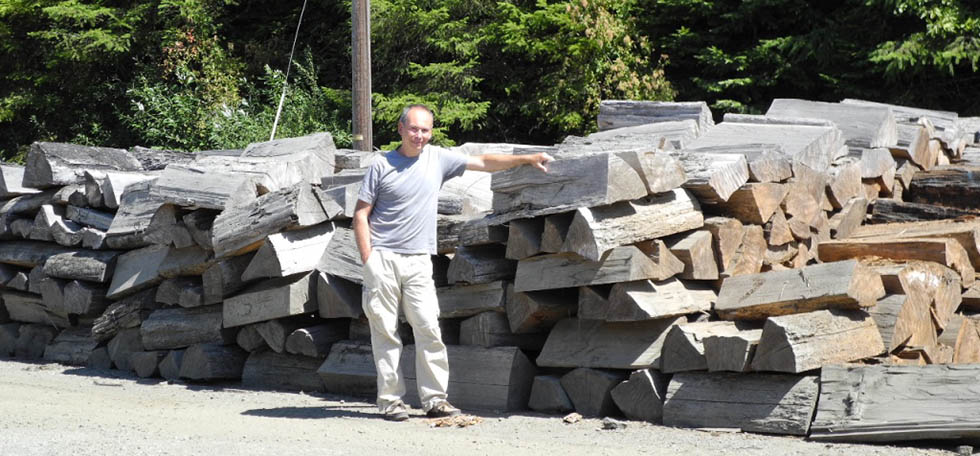
Jerry’s teams arrive by helicopter, locate the dry plant, get lowered, sling the plant, cut it at the base, and the helicopter places it at the collection point (where we are in the photo). There it will be cut into 82-cm pieces (according to law precisely) and loaded onto trucks that will take it to the Rose City for final processing.
Now you may have figured out why some shafts have strange black soot streaks-these are the ones I consider “luckier” and use for big occasions.
Jerry’s proud tale continues inside the plant where the logs are reduced to sticks as we know them, hand-selected one by one by three ladies, to be divided into the three groups of choice: PREMIUM, the best I import; SELECT, the second choice but still pullable; and MILL RUN, the “as it comes it goes.”
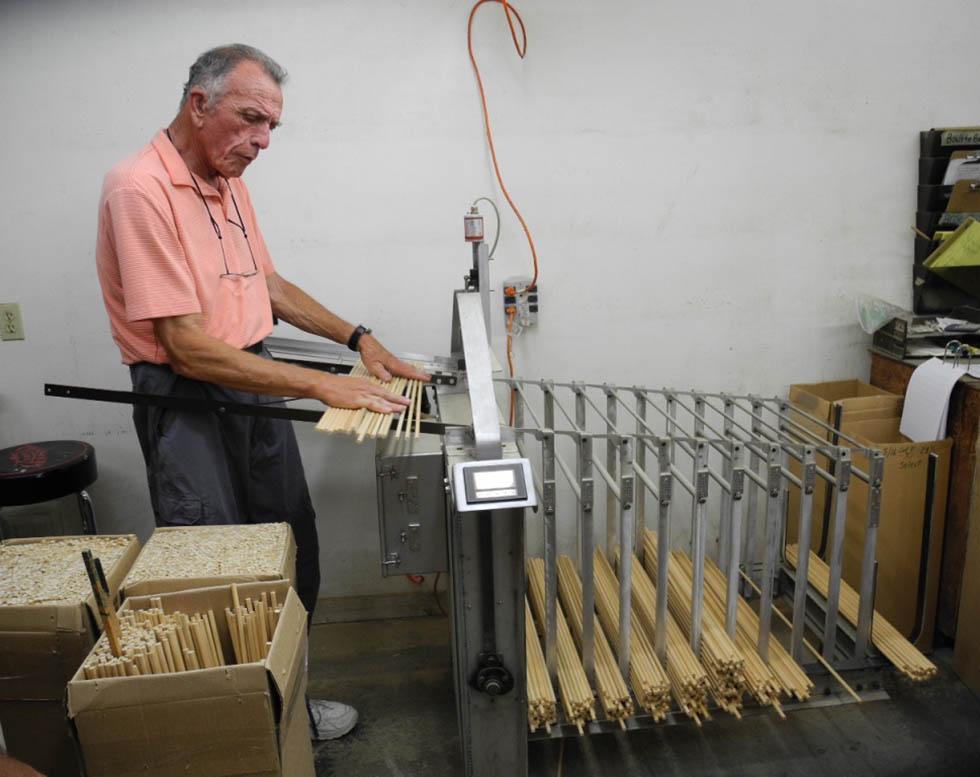
Lastly, the shafts are passed through an automatic industrial pinner that selects them by plugs: PREMIUMs in groups of 5 in 5 (35-40, 40-45, etc.) SELECTs in groups of 10 and MIL RUNs are not plugged.
I tried to approach the oldest in the group, sitting in front of a mountain of rods taking them one at a time to examine and sort them, and I asked her, “How many rods have you seen in your life?” … she laughed for quite a while …
To get an idea of how many shafts the Rose City produces try to think that I alone was importing 80,000 at a time and that, as they pointed out to me in the Easton offices, the consumption of arrows from around the world barely accounts for 10 percent of what is consumed in the U.S…..
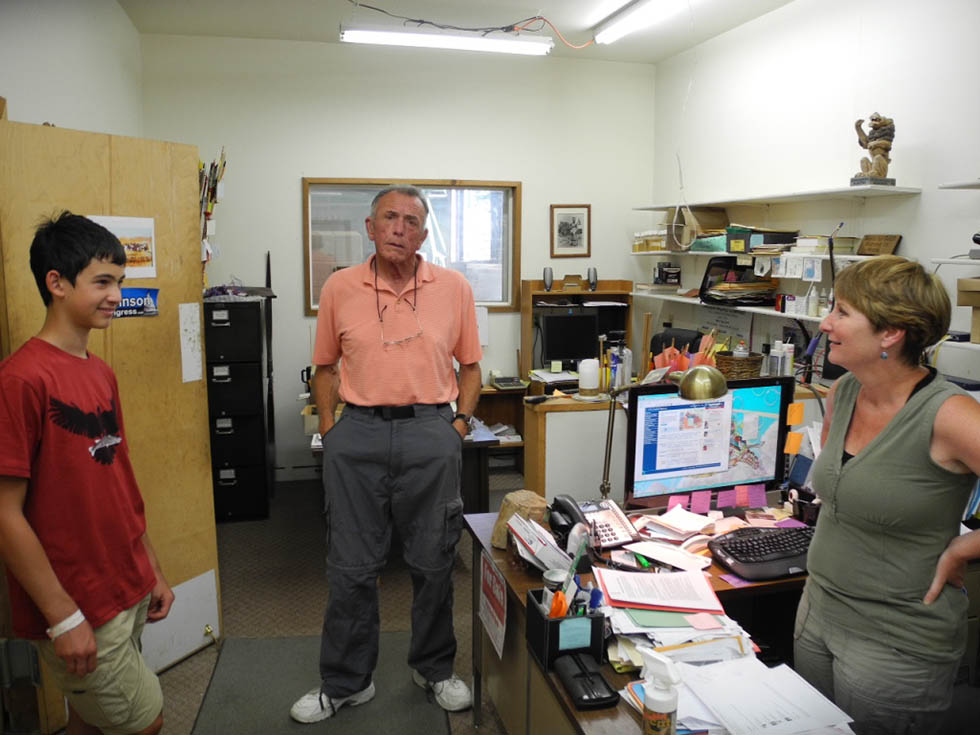
In the summer of 2011 I went back to visit Jerry and his firm with my 12-year-old son William, who will sooner or later inherit my business, and it’s about time I knew the details. The major news was that Jerry had married his secretary…. Otherwise tons of seasoned wood coming and going in pieces strictly no longer than 82cm, machinery cutting and sorting and mountains of boxes ready to be shipped all over the world. All wrapped in the usual splendid scent.
In the microscopic village of Mirtle Point, it was even exciting to see the very small bank agency to which I sent all those dollars… Unmissable is the logging museum.
Throughout the years Jerry has tried to complement the production of shafts with other items such as bows, nocks, etc., but I sincerely hope that he just continues to do what he does best…..
Shafts are produced in three diameters: 5/16 inch = 8mm, 11/32 = 9mm and 23/64 = 9.18mm.
Smaller diameter should correspond to softer thorns and vice versa but it is difficult to say which thorns will be obtained from a given piece of wood. Factors such as the growth area of the plant (sun or shade slope, more or less dry or rocky soil, etc.), part of the plant closer to the center or bark, and even the timing and manner of seasoning will affect its final elasticity. Therefore, the spines of the rod will only be discovered during its measurement, and it may happen that rods of the largest diameter are perhaps 35-40 in spines while from 5/16″ rods we get as much as 55-60.

Of course, small-diameter shafts are the most’ in demand because they are more aerodynamic but they are not necessarily the lightest, given the same number of plugs. It happens that stiff plugs in the small diameter (in high demand) are sometimes not available for long periods perhaps because the area from which they are taking the wood does not produce such stiff wood.
The spine measurement system used by ACME first and Rose City now is quite antiquated and inefficient. I tried to talk to Jerry about it but he wouldn’t hear of a change. Knowing American’s “static” about measuring systems I can understand that.
The system is based on the pounds of the bow for which that particular rod is recommended. So the 35-40 is “recommended for bows of those pounds.” Now, anyone who knows a little bit about bows knows that this is absurd. The same shaft can be suitable for bows of very different power, and the ratio depends on many factors: Type of bow, string used, length of arrow, actual draw length, and weight of tip. The most correct thing would be to simply state the spine and let everyone find the perfect fit with their bow without being influenced by those numbers.
Soon I had the idea of coloring the heads of the rods with a spray can before removing them from the box so that each remains marked with a color characteristic of a particular spine. Partly to solve this problem and also to prevent rods mistakenly moved to the wrong group from being confused, So from me and my dealers you will find SILVER, ORANGE, BROWN, etc., rods referring to the different plugs.
Another thing I had tried to convince Jerry of was to make the different quality choices recognizable. For example, make the PREMIUMs half an inch longer than the SELECTs to prevent some “smart” dealer from selling one for the other (as happened) but there was no way to please me.
For the past few years, however, shorter shafts have been available: 30 inches instead of 32 at a lower price, and this is only because this allows for better utilization of the lumber being worked. The 30-inch shafts are of identical quality, and archers who do not stretch more than 30 inches (about 95 percent in Italy) can save something.
In the end, to make an objective judgment about the auctions in Port Orford Cedar (perfume and luck aside) one must make these considerations:
If you are among those, like me, who do not believe in magic, you should keep in mind that there is no characteristic in a material (be it wood, carbon, aluminum, or what have you) that can make one arrow go better than another outside of the well quantified and known characteristics. Although dealers often try to convince us otherwise….

I will try to list the characteristics to look for in an auction with my comments (not necessarily in that order of importance):
– DURABILITY: This characteristic influences the wallet more than the shot and that is why I put it first, given the times… Keeping intact and without changing its characteristics over time is easier for carbon rods, among those made of wood surely POC is among the best materials. I would recommend great care when extracting from targets, especially 3ds where it is easy to twist the arrow by extracting it. Sometimes an arrow changes its spine or becomes very fragile after a tragic draw. I recommend not letting your wooden arrows be taken out by those who are used to carbon and its strength. In the end, the shafts that will most easily remain straight and durable are those with the wood grain most parallel and longitudinal to the shaft.
– THE SPINE (or degree of flexibility): Finding the right spine for one’s bow and characteristics is of paramount importance for enjoying good shots. Unfortunately, there are no tables or numbers that can seriously help us but only very simple tests. The machine that does the selection of plugs at Rose City is quite refined but one must keep in mind that it considers a “from-to” range and that, despite the really exceptional seasoning, some shafts might change their plugs. If we really want to get tough, it is best to equip ourselves with the necessary equipment to check this: Spinetester but, also and especially, precision balance. You will find that, for the same diameter, a different weight almost always corresponds to a different spine.
Several customers suggest that I do a manual selection myself by selling the rods thus perfectly selected at a higher price. I always recommend buying more rods and doing the sorting yourself; besides saving money, you may decide to use the discarded rods for fluflu or other arrows for “risky game” shots.
Lastly, I would like to say that the spine does not change by rotating the axis of the rod, either in the direction of the grain or in the opposite direction, and that even the varnish does not affect it appreciably
– WEIGHT: This is a very important factor. Of course, those who hunt huge animals prefer heavy arrows, but if you are not using them for hunting, it is best that they be as light as possible. Among woods POC is quite light, certainly more so than the Cembro used in Germany or other woods. Very important to check the weight of the arrows with the balance by deciding within what measurements to consider acceptable. Then arrows that are too light or heavy can be corrected by adding or removing weight at the tip (and nock) so they can be used in training.
– THE “DRYNESS”: The first thing you look at in a shaft but it is much less important than you think. Even an arrow with a few small bumps can fly just fine if it has the right spines. Also small bends can be corrected with a little patience. With PREMIUM cedar shafts I think we are at a good level.
– THE COST: This is most important, you already know it and I leave it for you to judge.
These are the factors to consider when considering a shaft, if they are met according to our personal list, it could be gold or rubber which would be just as fine. I believe that these in PORT ORFORD CEDAR are really the best compromise obtainable from wood. If you are superstitious or Buddhist, they will also bring you good luck!
GOOD SHOOTING!!